For high-income earners, a Roth IRA can offer valuable tax advantages, but income limits may prevent direct contributions. A backdoor Roth IRA offers another path to tax-free growth and qualified withdrawals in retirement.
While the strategy may sound straightforward, the tax outcome depends on more than moving money from one account to another. Existing pre-tax IRA balances, conversion timing, and proper reporting can all affect how the transaction is taxed.
This guide explains the 2026 rules and limits, how to complete a backdoor Roth IRA step by step, common mistakes to avoid, and when a mega backdoor Roth may offer an additional retirement savings opportunity.
2026 What Is a Backdoor Roth IRA?
A backdoor Roth IRA is a strategy, not a special type of retirement account. It usually involves three steps:
1. Make a nondeductible contribution to a traditional IRA using after-tax dollars.
2. Convert those funds to a Roth IRA.
3. Report the contribution and conversion on your tax return.
The strategy is primarily used by people whose income exceeds the limits for contributing directly to a Roth IRA. Although income limits apply to direct Roth contributions, there is currently no income limit on Roth conversions.
Once the money is in a Roth IRA, it can grow tax-free. Qualified withdrawals are also tax-free, and Roth IRAs do not require minimum distributions during the owner’s lifetime. For a closer look at how these accounts differ, see our Roth vs. Traditional IRA guide.
What Are the 2026 Roth IRA Income Limits?
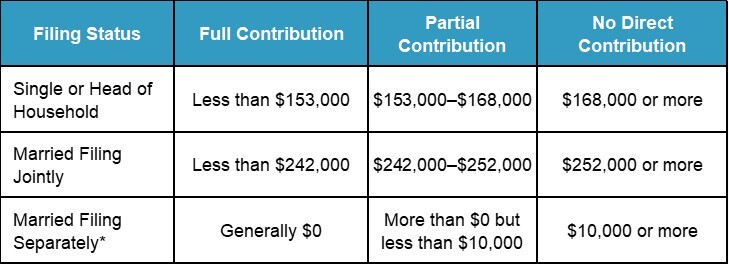
Your eligibility to contribute directly to a Roth IRA depends on your tax filing status and modified adjusted gross income (MAGI). As your income moves into the phase-out range, your contribution amount decreases. Once your MAGI reaches the upper threshold, you can no longer make a direct Roth IRA contribution for that year.
2026 Roth IRA Income Limits by Filing Status
Source: IRS Publication 590-A: Contributions to IRAs
*These limits generally apply if you lived with your spouse at any point during the year. Different rules may apply if you lived apart for the entire year.
If your income exceeds these thresholds, consider a backdoor Roth IRA. The Roth conversions do not have the same income restrictions as direct Roth contributions.
What Are the 2026 Backdoor Roth IRA Contribution Limits?
The IRA contribution limits increased for 2026:
2025 vs. 2026 IRA Contribution Limits
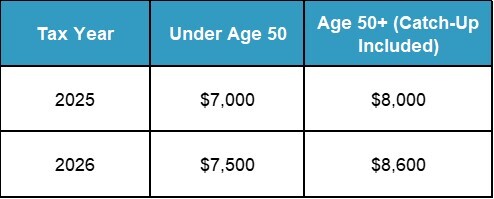
This is a combined limit across all of your traditional and Roth IRA contributions. It is not a separate limit for each account. Contributions also cannot exceed your eligible compensation for the year.
A 2026 IRA contribution can generally be made through the April 15, 2027, federal tax-filing deadline. However, the contribution and conversion are separate transactions:
-
The IRA contribution is assigned to a specific contribution year.
-
The conversion is reported in the calendar year it occurs.
For example, if you make a 2026 traditional IRA contribution in early 2027 and convert it shortly afterward, the contribution is reported for 2026, but the conversion is reported for 2027.
How to Do a Backdoor Roth IRA in 2026
Before You Begin: Review Your Existing IRA Balances
Before making a nondeductible IRA contribution, take inventory of all your traditional, rollover, SEP, and SIMPLE IRA balances. The IRS considers these accounts together when calculating the taxable portion of a Roth conversion. This is known as the pro-rata rule. Overlooking an existing pre-tax IRA is one of the most common reasons a backdoor Roth conversion results in an unexpected tax bill.
Balances in 401(k), 403(b), and governmental 457(b) plans are generally excluded from this calculation.
If you have substantial pre-tax IRA funds, your employer plan may allow you to roll eligible pre-tax IRA assets into the plan. Completing that rollover before year-end could reduce or eliminate the pro-rata issue.
Step 1: Make a Nondeductible Traditional IRA Contribution
Open a traditional IRA if you do not already have one. You may then contribute up to $7,500, or $8,600 if age 50 or older, subject to your earnings and any other IRA contributions.
The contribution is made with after-tax dollars, so you would not claim an IRA deduction for the amount used in a backdoor strategy.
Be sure to designate the correct contribution year, especially if you contribute between January 1 and the tax-filing deadline. These contributions could apply to either of two tax years.
Step 2: Convert the Funds to a Roth IRA
Once the contribution settles, you can request a Roth conversion through your financial institution.
The IRS does not specify a mandatory waiting period between the contribution and conversion. Many taxpayers convert as soon as possible to limit the potential for investment gains. If the contribution increases in value before it is converted, the growth generally is taxable as ordinary income at conversion. Some custodians also impose a short holding period, so confirm your financial institution’s policy before contributing.
Step 3: Report the Conversion Properly
Three tax forms are involved in a backdoor Roth IRA conversion:
-
IRS Form 8606: Reports your nondeductible traditional IRA contribution, after-tax IRA basis, and Roth conversion.
-
Form 1099-R: Issued by the financial institution to report the traditional IRA distribution or conversion.
-
Form 5498: Reports IRA contributions and certain account activity. It often arrives after the filing deadline and generally is not filed with your tax return.
Form 8606 is especially important because it documents the portion of your IRA that has already been taxed. Missing or inaccurate forms can create basis-tracking problems and may cause more of a future distribution or conversion to appear taxable than it should be.
Tax Considerations for a Backdoor Roth Conversion in 2026
How Does the Backdoor Roth IRA Pro-Rata Rule Work?
The pro-rata rule prevents taxpayers from converting only after-tax dollars in an IRA while leaving all pre-tax funds untouched.
Instead, the IRS generally combines the value of all traditional, rollover, SEP, and SIMPLE IRAs owned by the taxpayer. The tax-free portion of a conversion is based on the percentage of total IRA funds that represents the after-tax basis. The calculation also considers the taxpayer’s applicable December 31 year-end IRA balance.
Pro-Rata Rule Example
Assume you have:
-
$92,500 in pre-tax traditional and SEP IRA funds
-
A new $7,500 non-deductible IRA contribution
-
$100,000 in total IRA funds before the conversion
Your $7,500 after-tax basis represents 7.5% of the total IRA funds. If you convert $7,500:
-
Approximately $562.50 would be tax-free.
-
Approximately $6,937.50 would be taxable as ordinary income.
The remaining after-tax basis is not lost. It stays attached to your IRA accounts and should continue to be tracked on Form 8606.
For additional strategies involving retirement accounts and taxable income, see our high-net-worth tax planning guide.
What Taxes Apply When Earnings Accrue Before Conversion?
A nondeductible contribution has already been taxed, so it generally should not be taxed again when converted. However, investment gains earned before the conversion are generally taxable as ordinary income.
For example, if you contribute $7,500 and the account grows to $7,550 before conversion, the additional $50 generally would be taxable. Converting relatively soon after the contribution settles may help limit this taxable growth.
Existing pre-tax IRA funds can also make part of the conversion taxable under the pro-rata rule, even if the specific account being converted contains only the new nondeductible contribution.
What Is the Five-Year Rule for Roth IRA Conversions?
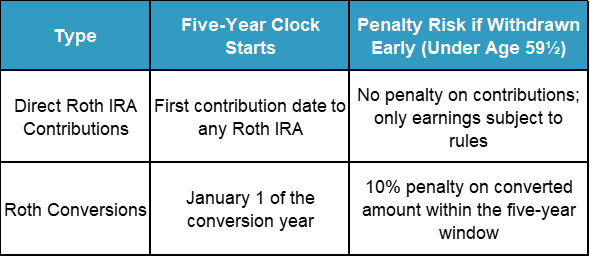
Each Roth IRA conversion has its own independent five-year holding period. Withdrawing converted amounts before age 59½ and before the five-year window closes may trigger a 10% early withdrawal penalty. The five-year clock starts January 1 of the year the conversion occurs.
Five-Year Rule: Direct Contributions vs. Conversions
Pros and Cons of a Backdoor Roth IRA
As with any tax strategy, there are trade-offs to consider when deciding if a backdoor Roth IRA is the right strategy for you.
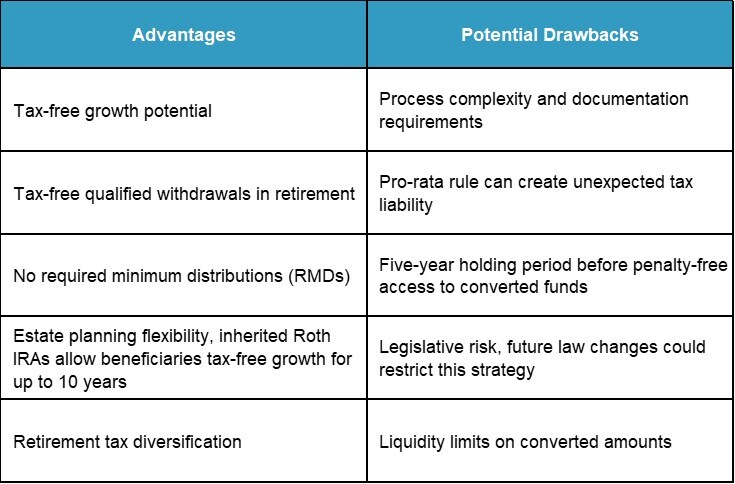
Inherited Roth IRAs may provide beneficiaries with tax-free qualified distributions, but most non-spouse beneficiaries must still empty an inherited account within 10 years. Review our estate tax planning article for broader legacy considerations.
What Is a Mega Backdoor Roth Strategy?
A mega backdoor Roth is different from the standard backdoor Roth IRA. Instead of using a traditional IRA, it leverages after-tax contributions made through an employer-sponsored retirement plan, typically a 401(k).
Those after-tax funds are then converted to a designated Roth account in the plan or rolled into a Roth IRA, depending on the plan’s rules.
Not every workplace plan supports this strategy. The plan generally must allow both:
1. After-tax contributions beyond regular pre-tax or Roth deferrals
2. In-plan Roth conversions or in-service distributions to a Roth IRA
Confirm the eligibility features of your plan with your plan administrator before contributing.
What Are the 2026 Mega Backdoor Roth Contribution Limits?
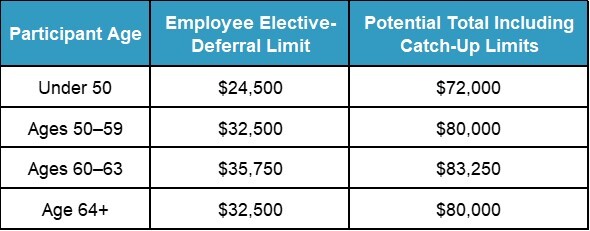
Source: IRS, 2026 Amounts Relating to Retirement Plans and IRAs.
The full amount shown is not automatically available for after-tax contributions. Your regular employee deferrals, employer match, profit-sharing contributions, and other annual additions reduce the remaining amount.
For example, assume an employee under age 50:
-
Contributes $24,500 through regular salary deferrals
-
Receives a $10,000 employer contribution
-
Has a $72,000 annual additions limit
That would leave up to $37,500 for after-tax contributions, if the plan permits them, and no other annual additions apply.
Standard Backdoor Roth vs. Mega Backdoor Roth
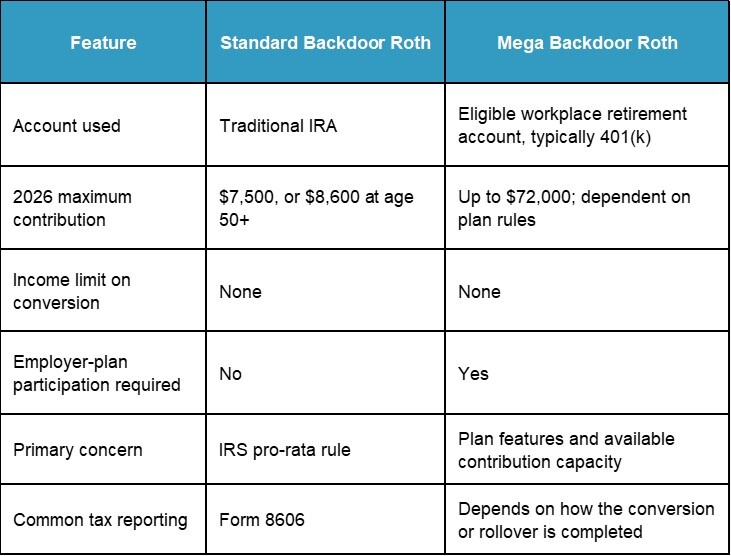
The mega backdoor Roth may provide more Roth savings capacity, but it is available only when the employer’s plan allows it.
Common Backdoor Roth IRA Mistakes, and How to Avoid Them
-
Waiting too long to convert. Earnings that accrue before conversion are taxable as ordinary income. To avoid this tax, convert as soon as funds settle.
-
Ignoring pre-tax IRA balances. Rollover IRAs, SEP IRAs, and SIMPLE IRAs all trigger the pro-rata rule. Rolling them into a current workplace 401(k) first can eliminate the issue before it starts.
-
Missing Form 8606. Not filing Form 8606 will result in double taxation on after-tax dollars already contributed. File this form every year, no exceptions.
-
Confusing contribution and conversion deadlines. Contributions for 2026 can be made through April 15, 2027. Conversions must occur by December 31, 2026. Remember, these are separate deadlines.
-
Assuming all 401(k) plans allow the mega backdoor. Always check your plan documents and confirm eligibility with your plan administrator before making any changes.
-
Disregarding the broader tax picture. Current versus projected future tax brackets, existing account balances, and withdrawal timing all factor into whether the strategy makes sense. See our tax-efficient investing guide for a complete framework.
Is a Backdoor Roth IRA Right for You in 2026?
A backdoor Roth IRA may be worth considering if you:
-
Earn too much to contribute directly to a Roth IRA.
-
Have eligible compensation and room within the annual IRA limit
-
Have little or no pre-tax money in traditional, SEP, or SIMPLE IRAs
-
Expect to keep the money invested for many years.
-
Want greater tax diversification in retirement.
The strategy may be less beneficial if you qualify for a simpler direct Roth contribution, have substantial pre-tax IRA balances, expect to need the converted funds soon, or would create a tax cost that outweighs the possible long-term benefit.
It is also important to consider your current and expected future tax brackets. Paying tax sooner does not automatically produce the best lifetime result, even when Roth savings offer attractive benefits.
Plan Before Your Convert
A backdoor Roth IRA remains one of the most effective tax-planning tools available to high-income earners in 2026. However, the account transfer is only one part of the process. Existing IRA balances, the pro-rata rule, transaction timing, and accurate tax reporting can all affect the outcome.
Before completing a standard or mega backdoor Roth, consider how it fits into your current tax situation and long-term retirement plan. An LTax professional can help you evaluate the potential tax cost, avoid reporting mistakes, and coordinate the strategy that fits your overall financial goals.
Contact an LTax team member to determine if a backdoor Roth IRA is the right move for your 2026 retirement plan.
Frequently Asked Questions
Does the pro-rata rule apply to SEP IRAs and SIMPLE IRAs?
Yes. Traditional, rollover, SEP, and SIMPLE IRA balances generally are included when calculating the taxable portion of a Roth conversion. Roth IRA and workplace-plan balances generally are excluded.
Can both spouses each do a backdoor Roth IRA in 2026?
Each spouse may contribute to and convert funds from separately owned IRAs, provided the couple has sufficient eligible compensation. Each spouse must also complete their own reporting.
What happens if I contributed directly to a Roth IRA and my 2026 income later exceeded the income limit?
If you contribute to a Roth IRA and your earnings exceed the income limit, you will most likely need to recharacterize the contribution to a traditional IRA or remove the excess contribution and related earnings. The appropriate solution depends on the timing and circumstances, so address the issue immediately with a tax professional or financial institution.
Is a backdoor Roth IRA still allowed in 2026?
Nondeductible traditional IRA contributions and Roth conversions are still allowed in 2026. The passage of the One Big Beautiful Bill did not eliminate this strategy. However, tax legislation evolves, so it’s important to check with a qualified tax professional to make sure you’re compliant with current regulations.
LEGAL OR TAX: The information herein is not legal, such as trust or estate planning, advice, or tax advice. Any such information is provided for illustrative purposes only and must not be relied upon without the benefit of the advice of your lawyer and/or tax professional. Lido specifically disclaims any liability from any reliance on such information. Lido is not a legal service provider or tax professional and does not offer legal or tax advice. Should you desire to obtain tax or legal services or advice, you must enter into your own, independent engagement agreement with a licensed attorney or tax professional.